affiliate marketing

bid ads

Bogoda wooden bridge

Bogoda wooden bridge was built in the 16th century during the period of Dambadeniya era. This is said to be the oldest surviving wooden bridge in the world. The bridge is situated at 13 km south of Badulla city, Sri Lanka. All parts of this bridge was constructed by woods using wooden nails as fixing material. The roof tiles show the influence of Kingdom of Kandy. The bridge was built across the Gallanda Oya, which linked Badulla and Kandy ancient route.


he Bogoda bridge is over 400 year old and made entirely out of wooden planks which are said to have come from one tree. It is an exclusive construction as it has an 8 feet tall tiled roof structure for its entire span of nearly 50 feet length with a 6 feet breadth. The archeologists believe there were two reasons for the roof over the bridge. One for shelter and second for protection from the wilderness. Wooden fences of the bridge was decorated in various ancient designs, have been erected on either sides.
The structure of the bridge is standing on a huge tree trunk 35 ft in height. Jack fruit (Artocarpus heterophyllus) logs and Kumbuk (Terminalia arjuna) logs were mainly used as the constructive material of the bridge. Furthermore Kaluwara (Diospyros ebenum) timber and Milla timber were used for the wooden decorations.

Bogoda Buddhist temple is an ancient temple situated beside the Bogoda wooden bridge. The temple has much longer history than the bridge. It is came from 1st century BC, during the period of Anuradhapura era. The temple was built by the under instruction of King Valagamba. Stone inscription by the temple in Brahmin scripture says the temple was donated to a priest called Brahmadatta by Tissa, a provincial leader in Badulla.
Inside of the temple were elaborated with lovely paintings,bearing resemblance to the Kandyan era. The walls were built with a paste made of cotton wool, bee honey and extracted and purified white clay. The paintings were drawn on this walls

Trincomalee Beach

Trincomalee Images

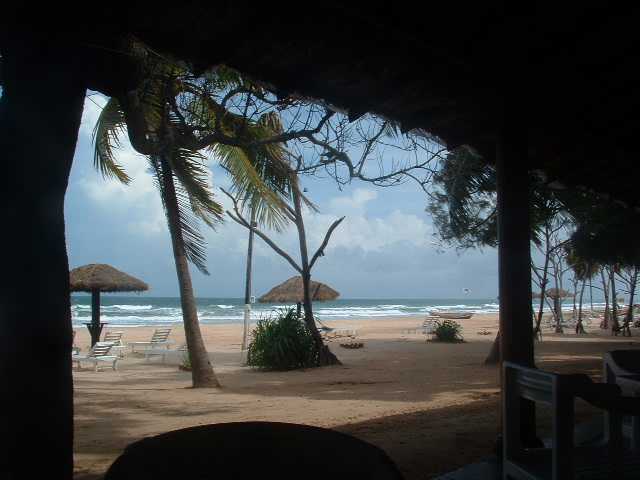
Trincomalee is famed for its natural harbour. Described by adniral Lord Nelson as the finest harbour in the world when he visited aboard HMS Seashore in 1770. It is ranked as the world's 5th largest natural harbour. During the second world war the harbour became the base for the combined East Asian Fleet of the Allied Powers. It is the ideal beach resort for beach addicts between April & November when the sea is at its best.
Trincomalee Images

Located at the mouth of Sri Lanka's longest river Mahaweli Ganga, Trinco's most famous landmark is Fort Federick, a centaury and a half of british fortifications can be found here. The cliff known as Swami Rock on the tip of Fort Federick promontory is associated with a tragic romantic tale woven around a Dutch maiden who is beleived to have jumped to her death from this spot seeing her fickle lover sailing away.

Trincomalee Photos
The Thirukoneswaram Kovil which stands on the top most pinnacle of the Swamy Rock is a high venerated Hindu shrine dedicated to Lord Shiva. The most famous and beautiful beach on the East Cost is Nilaveli, situated at the centre of the 30 km strand of beach which runs uninterrupted from north to Trinco. Close to Nilaveli is Red Rock Beach - an estuary perch and pinkish colour boulders. A shot boat - ride off the beach and you may visit Pigeon Island.

Trincomalee Photos

About 11 km from west of Trinco are the Kanniyai Hot - Sping, scared to hindus who believe them to be a creation of God Vishnu.
At:
කාලය දැක්වීමේදී යෙදෙන නිපාතය, කෙරෙහි, ගණන දැක්වීමේදී යෙදෙන නිපාතය, දී, නිසා, බැගින්, වෙත, ස්ථානය දැක්වීමේදී යෙදෙන නිපාතය, හි, ළග
Trincomalee Photos

Trincomalee Photos


Videos for Tricomalee

Negombo Beach

Negombo situated by the shores of a lagoon by the same name once has been a trading port for Portugese and Dutch and is a ideal place for those who want quick access to and from the airport. Attractions in the city are the old Dutch fort gate built in 1672 now a part of the prison, the Dutch Canal which was then a supply route to the Dutch administration, old churches and fishing villagers. The 100km long canal running through the town is still being used and is an attraction for those who want to see the country from a different perspective.
The stretch of road towards Kotchchikade comes to life at dusk (most shops are open at daytime too) with many handicrafts and curio shops, gem shops, restaurants and internet cafes catering for tourists

Fine sandy beaches of Negombo has been mostly unexplored but less crowded as most tourists use the town for the first or the last night of their stay in Sri Lanka. That is where the advantage where you have the beach mostly to your self. Nevertheless those who have identified it's secrets have been visiting the town year after year. Fine beach stretches are superbly maintained by the hotels while some are always busy with fisherman and their equipment. Equipment for water sports such as diving, wind surfing are available at most hotels and private vendors. There are few schools offering reasonable diving courses. 
Other attractions in the area include many old church buildings, their feasts dedicated to various saints if you happen to be around at the correct time and the fisheries port.

Muthurajawela Marsh off Negombo lagoon just south of the town is a unique wetland habitat and the largest marsh in Sri Lanka popular with eco enthusiasts. Day or half day excursions could be arranged to visit tile factories to the north of the town.

The Buddhist temple in the town is an unique structure where beautiful statures depicting various Buddhist events built beneath a giant Buddhist statue. Unfortunately poor maintenance and negligence has taken it's toll.


Nilaveli Beach

15 km north of Trincomalee begins the most famous beach on the east coast. Nilaveli Beach, Sri Lanka is one of the admirable and attractive tourism locations in the Sri Lanka with the seductive white sandy beaches ‘s and the crystal clear waters.  Nilaveli Beach, Sri Lanka also famous as one of the finest beaches in the country among both foreigners and locals.
This calm Nilaveli Beach, Sri Lanka stretches about 6km up to Uppuweli, Sri Lanka.  Pigeon Island is one of the popular destination 300m from the Nilaveli Beach, Sri Lanka, is famed for snorkeling & diving.

One of the finest beaches in Sri lanka, the pearly sands, the breath-taking coastline this is a tangible proof of serenity in our island. It is so unique that the feeling you experience when you see it, is unique itself. One can really connect with nature at this beach at an intense level. This is a place where most people come to take a break from the hectic lives and rejuvenate.


The beach is ideal to visit durin April and October. The Sun is at its most intense during this period so that you can work out on your tan. Watersports are also a huge feature in this beach, surfing and windsurfing are the major excursions undertaken here. This is a must in everyones itinerary when visiting Sri Lanka. 

Water sports such as wind surfing and diving are very famous among tourists and even locals. 

Sun bathing is also a really great option if you want to work out on your tan. Snorkelling is also done along the small rocky islands just abit further away from the coast.  

The hot water wells and pigeon islands are the major tourist attractions however an old fort from the colonial era is also present.

Arugam Bay

Tucked away on the South Eastern coast of Sri Lanka- about 300 km (or about 8 to 9 hrs. drive through beautiful Countryside) from Colombo, is the lazy little fishing village of Arugam Bay – richly endowed with a beautiful stretch of ocean and vast expanses of deserted beach. For many years a popular sea side holiday resort for local travelers, Arugam Bay has grown in the last twenty five years, into a big attraction for lovers of the surf, who converge on it in numbers from different parts of the world, to indulge in their favorite hobby of surfing and enjoy the bonus of a cheap, easy going, hassle-free lifestyle, among friendly Sri Lankan people.Arugam Bay is unique, in that it enjoys the distinct advantage of being unaffected by the ravages of two monsoons which hit the Island each year from opposite directions – the South West and North East. A phenomenon which makes Arugam Bay a “year round” destination with excellent weather and ideal conditions for a nice, relaxed holiday away from it all. Meteorological records show 330 sunshine blessed days/year in average. 


Another rare phenomenon which sets Arugam Bay apart from other tourist destination is that, despite its popularity among visitors it managed to retain its natural beauty, charm, simplicity and above all, a tranquil atmosphere which makes it an ‘unspoiled’ holiday resort, offering low budget travelers a perfect ‘get-away’.
Away from the sea and sands, Arugam Bay has a wealth of magnificent inland landscapes for the nature lover, a sleepy lagoon which comes alive with an abundance of indigenous and migratory bird life in the European winter, plus the remains of an ancient heritage in the form of temples and monasteries. Sri Lankas’s biggest wild life sanctuary the Yala National Park and one of the most venerated Hindu shrines in the country -Kataragama, are also easily accessible from Arugam Bay.


Accommodation is as modest as the village itself, with very basic facilities available in several small hotels or guest houses which continue to provide unpretentious ‘homely’ accommodation, with no such luxuries as air conditioning, for instance. However, there are also a few hotels which are star class and provide up to date luxuries/facilities.
Recent considerations
Events like the Tsunami destruction has affected all the seaside hotels and guesthouses.
No real help has been received from any Organization, Government or any other official source claiming to rebuild the Nation. With own resources, as well as goodwill from guests some visitors only true private help has resulted in the slow, but still rather low quality rebuilding of most establishments.

Security considerations
Arugam Bay is very lucky to be far away from any unrest and violence in the Country.
The Bay is strategically totally unimportant and it is also very easy to police and patrol.
The only access is via a small, narrow bridge across the lagoon; where a good check point is located.

Even in the prolonged civil war years most residents only heard the news on the radio and media. Taking everything into account Arugam Bay is perhaps one of the safest destination you could visit globally these days!
In September 2006 the sleepy Bay was caught in the middle between a dispute of nearby PottuVille residents and Security forces. Although there were no injuries in the Bay, the civil unrest resulted in a travel warning issued by a number of Countries.

For the first time ever, and from our point of view unjustified, Arugam Bay has lost its reputation as being a very peaceful, stable destination.

Kaudulla National Park

Kaudulla National Park is a national park on the island of Sri Lanka located 197 kilometres (122 mi) away from the largest city, Colombo. It was designated a national park on April 1, 2002 becoming the 15th such area on the island. In the 2004–2005 season more than 10,000 people visited the National Park, generating an income of Rs.100,000 from entrance fees. Along with Minneriya and Girithale BirdLife International have identified Kaudulla as an Important Bird Area.

Historically Kaudulla was one of the 16 irrigation tanks built by King Mahasen. Following a period of abandonment it was reconstructed in 1959. It now attracts and supports a variety of plant and animal life, including large mammals, fish and reptiles
he region receives an annual rainfall of 1,500–2,000 millimetres (59–79 in) including rain from the north-east monsoon.

A dry period persists from April to October.
Temperature ranges from 20.6 °C (69.1 °F) to 34.5 °C (94.1 °F). Many plant and grass species grow well during the rainy season whilst an abundance of food and water, even in the dry period, attracts a large number of herbivorous mammals to the park.
The vegetation of the park represents Sri Lanka's dry evergreen forests. Chena cultivation and grasslands surround the tank area.

The community of phytoplankton in the Kaudulla tank includes blue green algae, Microcystis spp. and diatoms such as Melosira spp.. Manilkara hexandra, Chloroxylon swietenia and Vitex altissima are the dominant tree species in the forest surrounding the tank. Bushes such as Randia dumetorum, and Calotropis gigantea and grasses such as Imperata cylindrica, and Panicum maximum are abundant in some areas.

Minneriya National Park

Minneriya Giritale National Park (8890 ha) with magnificent ancient Minneriya man-made reservoir (3000 ha) stealing the limelight, is located in close proximity to three more wild life parks of Sri Lanka Holidays: Kaudulla National Park to the north, Wasgomuwa national Park to the south and Flood Plains National Park to the north-east. Furthermore Minneriya Giritale National Park is situated within the famed Cultural Triangle of Sri Lanka that features no less than five UNESCO World Heritage Sites (Culture): Anuradhapura to the north-west, Polonnaruwa to the south-east, Sigiriya to the south-west, Golden Dambulla Rock Cave Temple to the south-west and Kandy to the further south of Dambulla. 

Reaching Minneriya-Giritale National Park
Minneriya–Giriatale National Park has a very convenient gateway: Habarana. Habarana, an important transportation hub of the cultural triangle is the intersection of A6 main road of Colombo-Ambepussa-Habarana-Trincomalee and A13, A11 main road that runs from Anuradhapura to Polonnaruwa via Habarana and Minneriya. Minneriya National Park, located 182 km away from Colombo, though in the utter wilderness, can be reached by railway too. Minneriya railway station, which is close to the entrance of the park, is on line that runs from Colombo to Trincomalee via Polonnauwa. Minneriya railway station is between the railway station of Gal Oya Junction (close to Kaudulla National Park) and Hingurakgoda railway station. This Gal Oya Junction in Polonnaruwa district mentioned herein oughtn’t be confused with famous Gal Oya National Park in Ampara district) 

Entrance to the Minneriya-Giritale National Park
Entrance to the Minneriya-Giritale National Park cannot get any better: it is where the A11 main road touch the railway line.
Vegeation at Minneriya Giritale National Park
The park has wide range of habitat types, from dry tropical forest to wetlands, grassland and terrain earlier used for slash-and-burn (chena) cultivation.
Best time to Visit Minneriya Giritale National Park
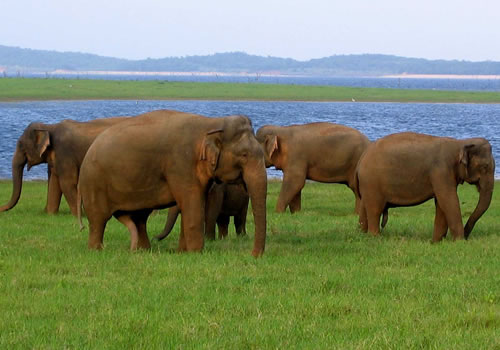
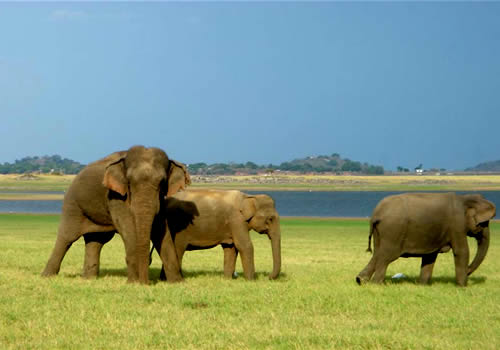
Sri Lanka Holidays wild life parks afford the sight of herds of wild elephants and other mammals throughout the year. However during the period of May to October (dry season of north central and eastern plains) Sri Lanka Holidays tourists are afforded the grand spectacle of a vast gathering of wild elephant. The gathering of elephants should not be mistaken for migration of elephants from the nearby wild life parks. The gathering is a phenomenon unique to Minneriya Giritale National Park. Kaudulla National Park has its own ancient irrigation reservoir called Kaudulla reservoir; Giritale sanctuary is located on the banks of Giritale reservoir; Wasgomuwa National Park is sandwiched between River Mahaweli ganga, the largest river of Sri Lanka and River Amban Ganga; Flood Plains National Park has Mahaweli ganga dividing it into two halves all the way to Somathiya Chatiya National Park to further north-east. In spite of the water bodies in and around the other national parks, elephants therein have found that the open grassland on the banks of the vast ancient Minneriya irrigation reservoir is the merry land to run riot during the dry season: drink and bath; feast and play; jostle and hustle to the content of their jumbo hearts. 

Minneriya Birdlife
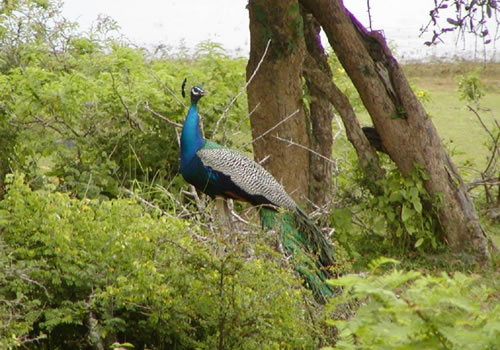
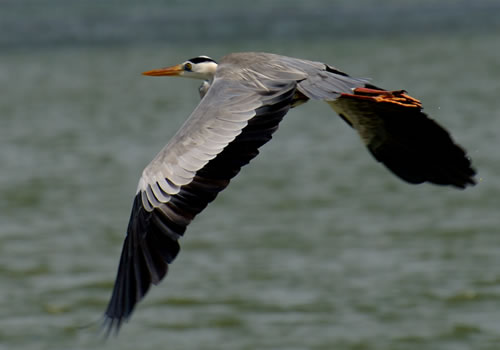
Minneriya National Park is home to no less than 160 species of birds. A visit to the bund of the enormous Minnerya irrigation reservoir is bound to be great joy to the bird enthusiasts, birders and ornithologists. King fishers and flycatchers, of many different sizes and degrees of brilliancy keep vigil over the shores of the lake. In the backdrop of contrasting vegetation and habitats of the Minneriya Wildlife Park, an enormous array of birds could be sighted. Among the migrating birds are Common sandpiper, Woodsand piper, Kentish Plovers. Malabar-pied Hornbills, Rufus Woodpecker the globally endangered Lesser Adjutant are among the forest birds. Add to these are of course the endemics to Sri Lanka: Sri Lanka Hanging Parrot, Crimson-fronted Barber, Sri Lanka Grey Horn bill, Sri Lanka Green Pigeon, Sri Lanka Jungle Fowl, Brown-capped Babbler, Emerald Dove, Green Imperial Pigeon. 

Minneriya Mammals
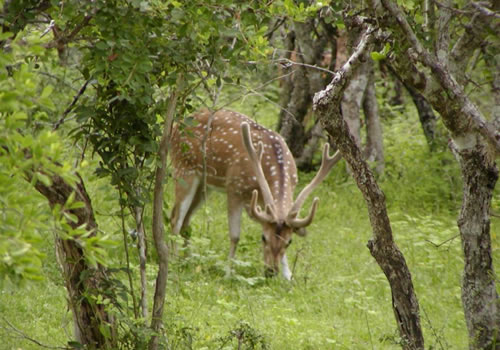
Minneriya National Park provides sanctuary to 24 species of mammals: Leopards, Spotted Deer, Sambar Deer, Wild Boar, Wild Buffalo, Grey Langers, Purple-faced Monkeys, Porcupine, Indian Pangolin and Mongoose. Oh! Yes the elephants, herds of elephants.
Minneriya Amphibians and Reptiles
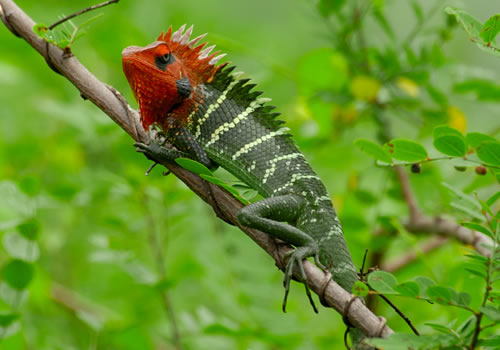
Minneriya Wild Life Park is home to nine species of Amphibians: common tree frog and slender wood frog are commonly seen. Among the 25 species of repitiles known to have found sanctuary in the park are Red-lipped Lizard (endemic), water monitor and land monitor, mugger Crocodile.
Minneriya Accommodation Options
Sri Lanka Holidays tourists visiting Minneriya Park afforded with the opportunities to enjoy the luxury of eco-oriented lodges and hotels in the wilderness of Habarana, Giritale and Kandalama and Dambulla. At the high end of the range are Hetitance Kandalama at Kandalama, Cinnamon Lodge at Habarana, Chaaya Village at Habarana , Deer Park Hotel at Habarana and Amaya Lake at Dambulla. 

Minneriya Reservoir
According to Rajavaliya (Sinhala: line of kings or genealogy of rulers), a Sinhalese historical chronicle written in Sinhala in Sri Lanka (Mahawamsa, the Great Genealogy was written in Pali verse in Sri Lanka), that narrates from the earliest times up to the reign of King Vimadharmasuriya the second at Kandy (1684-1706 AD), Minneriya irrigation reservoir of Sri Lanka Holidays was built by King Mahasena (276-302 AD), who reigned at Anuradhapura. Rajavaliya narrates: king Mahasena taking the services of Yakkas, constructed the Minneriya irrigation reservoir and dammed up the River Kara-ganga channeling its water to Minneriya. Considering the signs indicated by gods, he constructed an anicut across the River Talwatu-oya and bringing under cultivation twenty thousand paddy fields and caused to be constructed seventeen irrigation reservoirs, namely; Muvagamuva, Suralla, Didora, Mahaminiya, Kokkavava, Puskumbura, Rattalla, Mahaluvava, Suluguruva, Kalavana, Kimbulvana, Vatamodaragalla, Belipitiya, Vadunnava, Siruvalya, Rantisa and Minihiriya, taking the services of Yakkas during the night and of men during the day time.
Today, River Kara-ganga mentioned in Rajavaliya is called River Ambanganga. King Mahasena conferred vast Minneriya reservoir, together with 80,000 amunas (Sinhala: amuna is 2.5 acres of land that yield 5 bushels of rice) of land that it waters to jethavana dagoba monastery which he had built in Anuradhapura of Sri Lanka Holidays.
Yakkas (Sinhala: demons) indicated in Rajavaliya refers to a tribe of a savage non-human beings of great strength and super natural powers that was believed to have existed in the ancient times in Sri Lanka and India. Having Yakka tribe to engage in heavy construction work in the night is consonant with the belief, that prowess of those non-humans were believed to rise to stupendous proportions with the descent of night. The Mahabharata, one of the greatest two Hindu epics composed in Sanskrit, the language of Gods, (the other being Valmiki’s Ramayana) too narrates the heroic beings of untamed Yakka Tribe: Ghatotkacha, a most loyal son born to she-demon Hidimbi of ferocious Yakka tribe by Bhima was recognized as invincible demi-demon being with the descent of night. Gods indicated in Rajavlaiya, according to the Buddhist literature, are believed to be superior beings of great resplendence and immense merits and virtues in other planets who could assist the human beings, if they so desired. 

The splendor and grandeur of Minneriya Reservoir of Sri Lanka Holidays was narrated in the Sri Lanka travel book titled Ceylon, Beaten Track authored by W.T. Keble, 1940, Colombo in no ordinary terms. Quote. It seems incredible that man conceived and made Minneriya reservoir, the loveliest of lakes, so rich in all that is beautiful, so savage and untamed, and a true refuge from civilization. It is monstrous to say that the lake was made only that men might have rice in plenty to eat. It is the expression of the spirit of a mighty king who ruled over the great Sinhalese civilization. It was made for the glory of man become god, whose power was great enough to make his fellows the builders of what his mind conceived and his great heart loved to look upon, something wide and spacious, something grand and limitless which carried power and life to thousands, and yet had no want and felt no loss. He chained the force of nature for man, in a work small enough to feed his body, but found large enough to fill his soul and overflow into the grandest and widest conceptions of his being. The villager may well see the God in the spirit of the lake, for truth and beauty meet here in earth and water, in hill and valley, and in the great mirror that gives back the heavens to the eyes of gods and men. Unquote 

Following the death of King Mahasena, in the tradition of Sinhalese attributing the greatest reverence to the most venerable men, the king was thenceforth remembered as Minneri Deviyo (Sinhala: the guardian deity of Minneriya). The same honorific title was attributed to Charles Percival De Silva or C.P. De Silva (1912 -1972), who dedicated his lifetime to the Minneriya colonization scheme, firstly as a civil servant (1935-1952), secondly in the capacity of a most prominent and powerful cabinet Minister (1956-1970) of the successive governments. In modern history of Sri Lanka, C. P., as he was popularly known, was the only mortal, who was in the hearts of the grateful populace, elevated onto the status of a god. And that too, in his own life time. In that sense, C.P., it could safely be said, beat even the great King Mahasena. Sri Lanka must not fail to pay due tribute to C.P, the Modern Minneriya Deity as well as to King Mahasena, the ancient Minneriya deity. May both of them attain Nirvana, by virtue of their great merits.

Galoya National Park


Galoya National Park is situated in the eastern part of Sri Lanka and is an ecological destination and a national park centered around the Senanayaka Samudra Reservoir the largest inland body of water in Sri Lanka . Galoya is a great place for bird watching, nature expeditions and elephant sightings. The National Park lies south-east of the country in the Eastern and Uva Provinces. In addition to the national park, three sanctuaries were declared to protect the catchment area of this tank.

They are

Senanayake Samudra Sanctuary, Gal Oya Valley North-East Sanctuary and Gal Oya Valley South-West Sanctuary. Together these reserves and the national park cover approx 63,000 ha of land. The park and the three sanctuaries were established by the Gal Oya Development Board on the 12th of February 1954 and subsequently handed over to the Department of Wildlife Conservation in 1965.

Gal Oya is a valley, which has given refuge to several kings in the ancient past. In the 2nd Century BC, King Tissa sought refuge at the Digavapi, a place Lord Buddha visited in his third visit to Sri Lanka. The Digavapi Dagoba, built in the 2nd Century BC to mark the spot where the Lord Buddha sat on his last visit to Sri Lanka, attracts thousands of pilgrims even today.
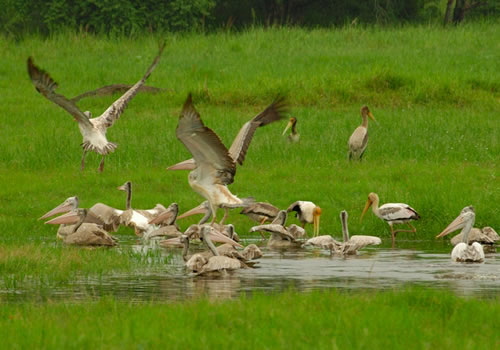
About 45% of the vegetation is evergreen forest, 33% savanna, 09% grassland, 02% cheina cultivations and the balance is water bodies dominated by the Senanayake Samudraya. A host of medicinal shrubs and trees such as Aralu, Bulu, Nelli can be readily found in the Nilgala area, while a number of locally known trees such as Vevarana, Halmilla, Veera, Palu, Ebony and Mahogany are found in great numbers. The park with its thick green canopy is a haven for species of birds and nearer to the Samudraya even migratory birds such as painted storks, pelicans, cormorants and teals could be seen. 


A host of local birds such as the Grey Dove, Malabar Horn Bill and Grey Horn Bill, Koel and a number of water birds are found in this jungle habitat. In addition to elephants, the park is home to leopards, bear, spotted deer, sambur, wild boar etc. Among other fauna are several species of monkeys, porcupine, a number of fish species, reptiles and four species of butterflies such as the Crimson Rose and Glassy Tiger have also been recorded.

Wasgamuwa National Park

There are many beautiful national parks across the length and breath of the country. Though now the flourishing Wasgamuwa National Park has many visitors, there is enough historical evidence to suggest that this woodlands were occupied by man during the ancient Sinhala kingdoms before the birth of Christ. The signs are a pointer to the fact that here prosperity reigned at one point of time. A huge canal, Kalinga Yodha Ela, was built during the reign of King Parakramabahu whose reign was in the 12th century. The remains of Malagamuwa, Wilmitiya, Wasgamuwa and Dasthota tanks are all relics of past prosperity. Pay a visit to Kalinga Island or Kalinga Duwa which too has areas of interest. Kadurupitiya, Dagoda, Baduruwayaya Buddha Statue, Malagamuwa stone pillars and other ruins emphasize the past glory of this area.

Within the Wasgamawa National Park, Yudanganapitiya, where the armies camped during the battle of the kings Durugemunu and Elara is a place of historical significance and should be on the “must see” list. There are at least twenty three species of mammals in this national park.
Around 150 elephants have made this park their home. Wild buffaloes, spotted Deer are very common here. It is possible to see a leopard or a sloth bear. There are also water monitors and crocodiles in the water holes in the park.
Innumerable species of birds are found here. In Sri Lanka there are around 428 species of birds. Some migratory birds too make the island their home. Since the island is a tropical paradise, it is not surprising that several birds of tropics are found here. All of them are brightly colored and some are song birds. About 143 species of birds are found in Wasgamawa National Park.

Several facilities are offered by the parks for the visitor wanting to stay the night. This park is open each day from 6.00 a.m. to 6.00 p.m. You have to make the reservation of Circuit Bungalows or Camp Sites from the Head office. There are three bungalows within the park and two bungalows outside the park. Seven campsites for nature lovers to study the natural environment are available within the park. The Wasgamuwa National Park lies within the Polonnaruwa and Matale districts and the Mahaweli River and Amban River flow as its eastern and western boundaries.

Uda Walwe National Park

Uda Walwe National Park, Sri Lanka is the best place in Asia to see herds of Asian Elephants, the pachyderms in the wild. Uda Walawe National Park, that retains their leaves even during the dry season, is one of Sri Lanka's Dry-Zone Dry Evergreen Forests that harbours one of Asia'a largest & most viable Asian elephant (Elephas maximus) populations. The 30,821ha park was set up in the year 1972 to protect the catchment area of the man-made Rainwater Reservoir located at the south end of the River Walwe. At the same time the reserve was designated to provide sanctuary to wild elephants.
For a dry zone park, it couldn't have been located in a better setting: to the north is grand escarpment of Central Highlands of Sri Lanka; to the south is Walawe ganga river flowing all the way down to the sea at Ambalantota close to Hambantota in the southern coast of Sri Lanka.
 Most of all, at the centre of the sanctuary lies the huge man-made rainwater reservoir with a surface area of 3400ha providing irrigation for farmlands downstream & generating hydroelectric power to the tropical island of Sri Lanka. You will be reaching the park by following the road along the 4km bund across the Uda Walawe rainwater reservoir.
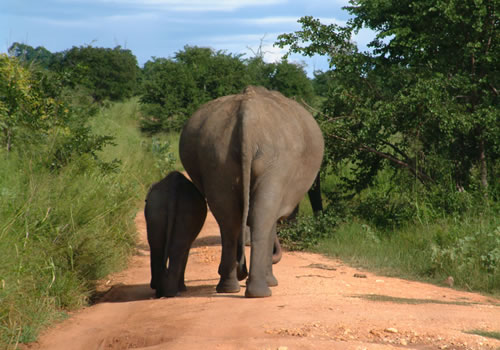
The variety of terrain makes the habitat home to variety of wildlife. While woodland of old Teak tree lines the River Walawe, open grassland is traversed by streams & scrub jungle. The extensive area of grassland devoid of forest cover makes the viewing of elephants easier than anywhere else in Asia: herds up to 100 or even more could be seen along the river & near the numerous streams & tanks. Behold the sight & a site of Sri Lanka Holidays. The wild elephants could be seen crossing the River Walawe too. The elephant-proof fence around the perimeter of the park prevents some 600 elephants, roaming freely around the reserve from getting out of it to attack the surrounding farmland. The fence also prevents the cattle, belonging to the farmers of surrounding villages, from getting into the reserve.
Uda Walawe Elephant Transit Centre
In 1995, Department of Wildlife in Sri Lanka, in an attempt to support the orphaned calves from the other areas of the island, set up the Elephant Transit Centre at Uda Walawe National Park itself with the support of Born Free Foundation. Twenty of the 32 calves are "foster parented". As in the famous Pinnawela Elephant Orphanage, herein too you would have the joy of seeing the baby elephants being bottle fed. Although it is fun to watch baby elephants being bottle-fed every three hours, since the jolly good fellows are kept in pens, you will not get right amongst them & caress them as you do with good little fellows at the famous Pinnawela Elephant Orphanage of Sri Lanka Holidays. At the age of five, the young elephants are returned to the wild: living free. While some are born free in the wild some are born in the captivity at Uda Walawe Elephant Transit Centre.
 The park is home to jungle cat, sloth bear, porcupine, pangolin, macaque, langur, jackal, leopard, sambar, spotted deer, barking deer, wild boar, mongoose, bandicoot, fox giant flying squirrel, water buffalo, crocodile & water monitor lizard.
Birds gather in large numbers around the tanks Magam, Habartu, Kiri ibban, Pulgaswewa, Timbirimankada. Among the aquatic birds are cormorants, kingfishers, herons & Indian darters. Endemic species include the Sri Lanka spur fowl, the Sri Lanka jungle fowl, the Malabar pied hornbill & the rare red-faced malkoha. Giving credence to the adage "small is beautiful" is the lesser adjutant of stork family: it is large & ugly. Among the raptors (birds of prey) are crested serpent, hawk, fish eagles, brahminy, black-winged kites, & the lovely white-bellied sea-eagle.


With 189 species of avifauna recorded in the park, in a single day of Sri Lanka Holidays at Uda Walawe, a keen eye would sight no less than 100 species of birds.

Around Uda Walwe
The location of Uda Walawe makes it within a couple of hours drive from Unawatuna Bay Beach as well as Ratnapura, the world renowned city of gems of Sri Lanka. Tissamaharama, an ancient city, home to a beautiful Buddhist stupa & magnificent Tissa Wewa, a large rainwater reservoir & the town of Hambantota are within a few hours drive too.
Hambantota of large salt lakes, where kitchen salt is produced from evaporated sea water in shallow lagoons. The sprawling salt lakes, with an ancient method of making salt, hugging main road make the drive with a sea breeze all the more pleasant. All along the drive are shore birds such as flamingos, gulls, plovers & terns attracted by the salt pans.

Wilpattu National Park

Wilpattu National Park is located 25km north of Puttalam or 30km west of Anurdhapura. The park that lies on the northwest coast spans the border between North Central Province and North Western Province of Sri Lanka. To the south of Wilpattu National Park is River Modergam Aru; to the north is River Kalay oya.

Reaching Wilpattu National Park Colombo-Puttalam A3 highway leads to the city of Puttalama. 42 km along the A12 Puttalama- Anuradhapura highway is a large sign board that reads Willpattu National Park. 7km along the road that turns to the left at the sign board takes you to the entrance of the park at Hunuwilagama.
Wilpattu was declared a wildlife sanctuary on the year 1905. On 25th February 1938, the sanctuary was elevated to the status of National Wildlife Park. On 7th November 1947, the northern area of Wilpattu was declared as Wilpattu North Sanctuary.
Wilpattu National Park, the largest wildlife sanctuary in Sri Lanka span an area of no less than 131,693 hectares with altitude ranging between the sea-level and 152 meters.
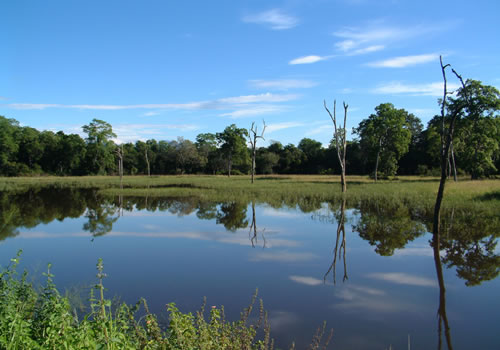
Topography of Wilpattu National Park situated in the dry zone, isn’t like any other wildlife sanctuary in Sri Lanka. A unique complex of over 50 wetlands called "Villu" is the most prominent topographical feature of the national park. 'Villu' are shallow natural lakes filled with rainwater surrounded by open grassy plains amidst the dense scrub jungle. The presence of these Villus with an abundance of water can best be explained in the weather patterns that prevail over the park: while the period of drought is only during the months of May to early September, the main rainy season is during September to December with the heavy downpours of north eastern monsoon; inter monsoon season visits the park March and April. Annual temperature in the Park is around 27.2 Celsius and its annual rainfall is approximately 1000 mm.
The best time to visit Wilpattu National Park is during the months of February and October. Wilpattu National Park has a good network of gravel roads, particularly between the water holes.

Wilpattu National Park consists of three types of vegetation: littoral vegetation including salt grass and low scrub immediately adjacent to the beach; a 5-10 km coastal belt of monsoon scrub of very low stature; and further inland, the wooded forest with tall emergents, such as Palu (Manilkara hexandra) and Satin (Chloroxylon swietenia), Milla (Vitex altissima), Weera (Drypetes sepiaria), Ebony (Disopyros ebenum) and Wewarna (Alseodaphne semecapriflolia). Some 73% of the park is dense forest or scrub and the rest is more open habitat.

Wilpattu National Park’s varying natural habitats; coastal belt, natural lakes (villus), rocky outcrops, scrublands, open grasslands and dense forest provide for numerous species of animals. Among the species are 31 mammals. The biggest draws in Wilpattu are Leopards (Panthera pardus kotiya) and Sloth bears (Melursus ursinus). Apart from those two mammals are Asian Elephants (Elephas maximus), Spotted Deer, Barking Deer, jackals, sambhur, barking deer, mouse deer Wild Pig, Water Buffalo (Bubalus bubalis) and Mugger Crocodiles.
The Villus support a wide range of birdlife: endemic birds include the Ceylon Junglefowl, Brown-capped Babbler, Ceylon Woodshrike and Black-capped Bulbul in riverine habitats.
Countless species of birds can be found and the park plays host to numerous winter migrants from November to March, while menacing crocodiles top the list of reptiles.
Butterflies recorded include the Great Eggfly, Blue Mormon, Common Mormon, Common Rose Great Orange Tip, Glad-eye Bushbrown, Blue Mormon, Common Mormon, Common Rose and Crimson Rose.

At Wilpattu National Park, among the reptiles found the most common are the Monitor (Varanus bengalensis), Mugger crocodile (Crocodylus palustris), Common cobra (Naja naja), Rat snake (Ptyas mucosus), Indian python (Python molurus).
 
Roaming on the grasslands are Star tortoises (Geochelone elegans) at Wilpattu. In the large Villus are Pond turtle (Melanonchelys trijuga) and the Soft shelled turtle (Lissemys punctata)
Wilpattu National Park and its surroundings are of history that runs as far as back to the arrival of Prince Vijaya in Lanka from East India in 543 BC. The landing beach of prince Vijaya is believed to be the area today known as Kudriamali. Kali Villu is said to be location of the palace of Kuveni, a princess of a native tribe in the island.
Wirandagoda and Galbendi Niyara located north-east of Maradanmaduwa at Wilpattu are believed to be two of the locations where prince Saliya, who forfeited his right to the crown of Lanka, lived with his low caste wife called Asoka Mala a couple of millenniums ago.
At Pomparippu of Wilpattu, several urns containing human remains have been found. The urns are believed to belong to period prior to the recorded history of Sri Lanka, i. e. prior to the arrival of Prince Vijaya in Lanka.
In the eastern part of Wilpattu are remnants of breached tanks left over from agricultural systems of ancient Sinhalese civilizations. Also between Palangaturai and Kollankanatte are the remains of an old harbour.