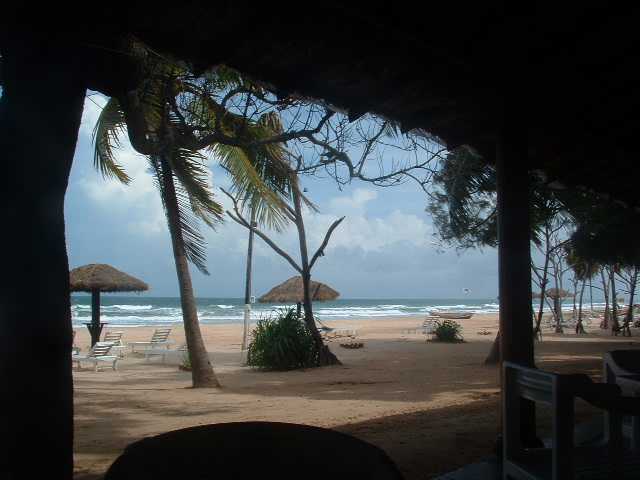
Tucked away on the South Eastern coast of Sri Lanka- about 300 km (or about 8 to 9 hrs. drive through beautiful Countryside) from Colombo, is the lazy little fishing village of Arugam Bay – richly endowed with a beautiful stretch of ocean and vast expanses of deserted beach. For many years a popular sea side holiday resort for local travelers, Arugam Bay has grown in the last twenty five years, into a big attraction for lovers of the surf, who converge on it in numbers from different parts of the world, to indulge in their favorite hobby of surfing and enjoy the bonus of a cheap, easy going, hassle-free lifestyle, among friendly Sri Lankan people.Arugam Bay is unique, in that it enjoys the distinct advantage of being unaffected by the ravages of two monsoons which hit the Island each year from opposite directions – the South West and North East. A phenomenon which makes Arugam Bay a “year round” destination with excellent weather and ideal conditions for a nice, relaxed holiday away from it all. Meteorological records show 330 sunshine blessed days/year in average.

Another rare phenomenon which sets Arugam Bay apart from other tourist destination is that, despite its popularity among visitors it managed to retain its natural beauty, charm, simplicity and above all, a tranquil atmosphere which makes it an ‘unspoiled’ holiday resort, offering low budget travelers a perfect ‘get-away’.
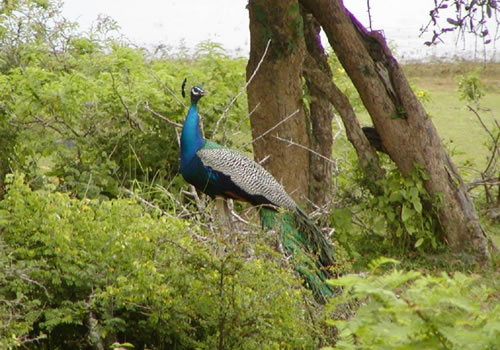
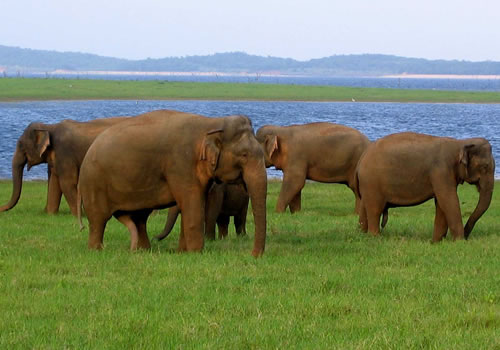
Away from the sea and sands, Arugam Bay has a wealth of magnificent inland landscapes for the nature lover, a sleepy lagoon which comes alive with an abundance of indigenous and migratory bird life in the European winter, plus the remains of an ancient heritage in the form of temples and monasteries. Sri Lankas’s biggest wild life sanctuary the Yala National Park and one of the most venerated Hindu shrines in the country -Kataragama, are also easily accessible from Arugam Bay.
Accommodation is as modest as the village itself, with very basic facilities available in several small hotels or guest houses which continue to provide unpretentious ‘homely’ accommodation, with no such luxuries as air conditioning, for instance. However, there are also a few hotels which are star class and provide up to date luxuries/facilities.
Recent considerations
Events like the Tsunami destruction has affected all the seaside hotels and guesthouses.
No real help has been received from any Organization, Government or any other official source claiming to rebuild the Nation. With own resources, as well as goodwill from guests some visitors only true private help has resulted in the slow, but still rather low quality rebuilding of most establishments.
Security considerations
Arugam Bay is very lucky to be far away from any unrest and violence in the Country.
The Bay is strategically totally unimportant and it is also very easy to police and patrol.
The only access is via a small, narrow bridge across the lagoon; where a good check point is located.
Even in the prolonged civil war years most residents only heard the news on the radio and media. Taking everything into account Arugam Bay is perhaps one of the safest destination you could visit globally these days!
In September 2006 the sleepy Bay was caught in the middle between a dispute of nearby PottuVille residents and Security forces. Although there were no injuries in the Bay, the civil unrest resulted in a travel warning issued by a number of Countries.
For the first time ever, and from our point of view unjustified, Arugam Bay has lost its reputation as being a very peaceful, stable destination.